Before starting a testosterone plan. You’ll need a recent safety blood test (within 3 months, from us or another provider). Answer a few questions to get started, and see if testosterone could help.
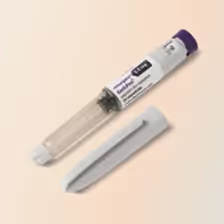
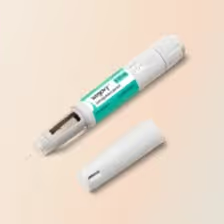
We offer all forms of testosterone which are regularly prescribed to women in our service. You need a blood test for testosterone in the last 3 months before your prescription can be issued.
Learn more about the exact treatments we offer here.
Before starting testosterone treatment, our doctors need to make sure it’s safe and suitable for you. This is done through either a baseline blood test or a doctor’s appointment, depending on whether you already have recent blood results.
Safety check blood test
A baseline blood test is required so that we can prescribe your treatment safely.
If you have a blood test from a different provider
If you have a testosterone blood test from a different provider in the last 3 months our doctors will accept that, and you don't need to buy another test. It must include total testosterone.
Start your testosterone plan
Once we know it's safe to prescribe, you can start your quarterly plan.
Our testosterone plans start from £79 per month, for 3 months. All plans include:

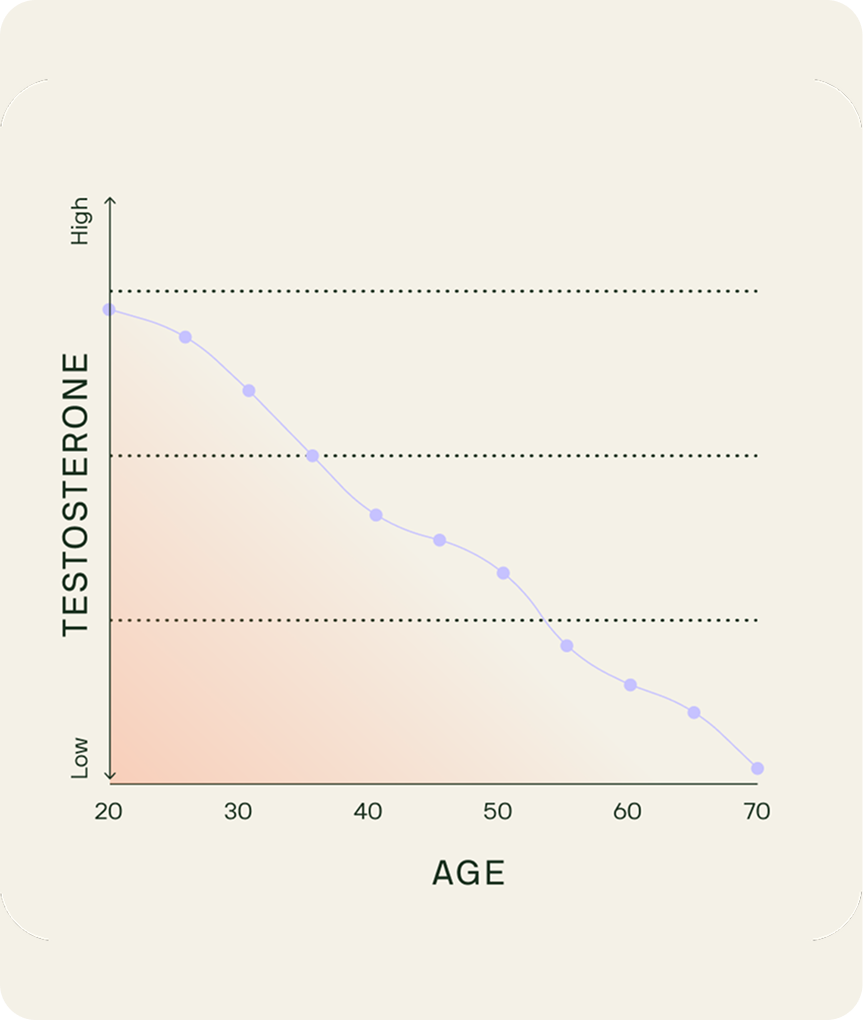
Testosterone is administered in low doses (usually via gel or cream) to bring levels back into the female physiological range. Testosterone is always prescribed alongside oestrogen therapy (HRT) to help support women experiencing persistent symptoms such as low sex drive (low libido). Usually, you will need to have been on HRT for at least 3 months before starting testosterone.
The 2024 NICE menopause guidelines state that testosterone can be considered for menopausal women with low sexual desire if HRT alone hasn't been effective. That's the official NHS guidance. The British Menopause Society extends this to include women with low sexual desire AND tiredness.
An international task force looked at testosterone therapy in 36 randomized controlled trials covering 8,480 women. They found testosterone improved multiple aspects of sexual wellbeing: desire, pleasure, arousal, orgasm, and it reduced distress about sex. Around 32% of women at midlife are affected by hypoactive sexual desire disorder - persistently low sexual desire that causes significant distress.
Time and again, studies show the benefits of testosterone for women. But the official guidelines currently only recommend testosterone for sexual function problems. They don't yet officially support using it for mood, energy, or cognitive symptoms (research is ongoing).
Testosterone is a recommended treatment in the UK for women with persistent low libido who are taking HRT. When prescribed at the right dose and closely monitored, testosterone is both safe and effective for women.
As with any hormone treatment, it’s not one-size-fits-all. That’s why your clinician will talk through the potential benefits based on your health, symptoms, and goals.
We also check your testosterone levels regularly to make sure your treatment stays safe, in the normal range and right for you.


.png)
.png)
.png)
.png)
.png)
.png)
Our plans run for 3 months because hormonal treatments usually take around that long to have their full effect.
We also send out medication in 3-month batches, rather than monthly.
We spread the cost across monthly payments, which helps make private care more affordable and easier to access.
To receive your next 3 months of medication, you’ll need to complete a review. We’ll invite you to do this at around 8 weeks into your plan, so there’s plenty of time to complete it and find an appointment with our team (if needed). The review is an important part of getting your treatment right. It’s where your clinician can adjust the dose or type of medication, and discuss adding other treatments if neededIf you complete your review and choose to continue with treatment, you’ll be committing to another 3-month plan, as your next supply of medication will again be sent for 3 month
No, the cost of your prescription (treatment) is covered in your monthly plan cost.
Plans are 3 month cycles.
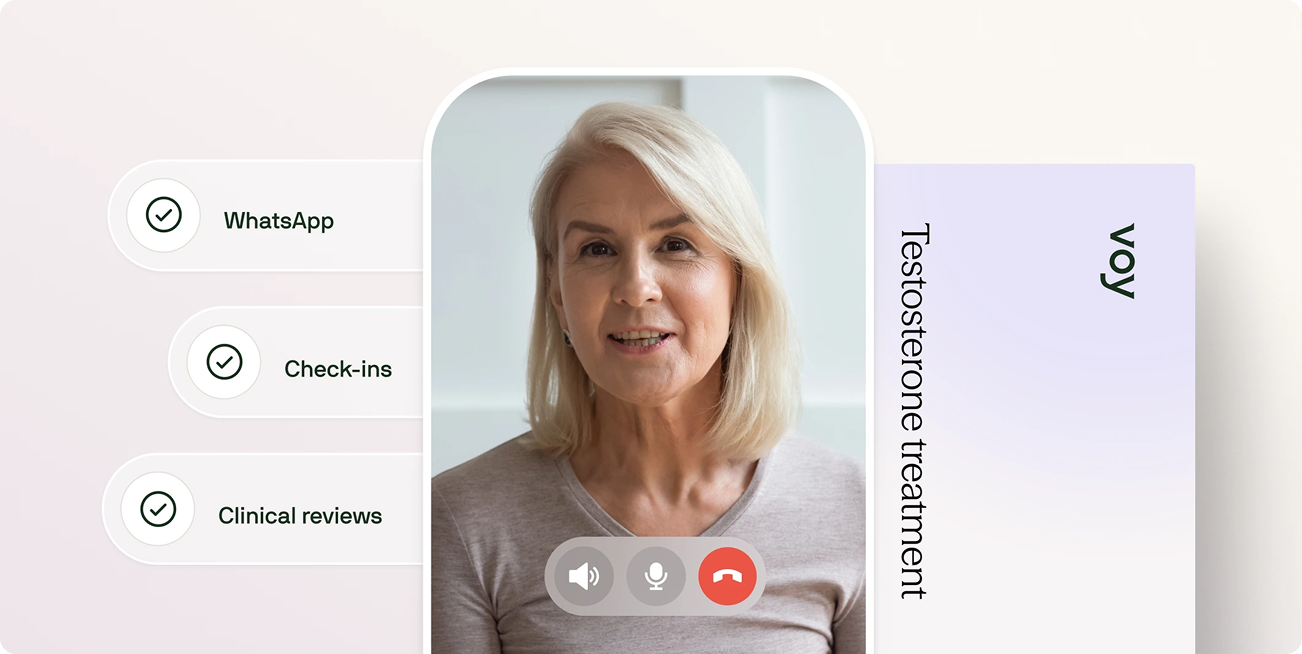
To cancel: In month 3 of your plan: before or after your review appointment. If you miss your review appointment - we will continue to charge you monthly as you will have access to our ongoing care (unlimited checkins with your doctor, and whatsapp messaging)
After month 3: We will continue to remind you to book your review, so you can access any more medication you might need.
During the first 3–6 months of testosterone treatment, we’ll check in more regularly to make sure your dose is right for you. This includes quarterly monitoring blood tests, which help your clinician understand how your body is responding and ensure your treatment is safe and effective.Once your testosterone levels are stable and you’re feeling well, your clinician will let you know when you can move to a yearly review cycle. At that point, you’ll usually just need one clinical review per year, along with a monitoring blood test beforehand.Your medication will continue to be sent to you every three months, automatically, so you don’t need to worry about reordering or running out.
.png)
Sometimes, the most effective treatment isn’t officially licensed for that exact uses — even if evidence and expert guidelines support it. That’s called off-label prescribing.
In the UK, this means a medication is being used in a way that’s not on its official license — for example, a different dose or patient group.
It doesn’t mean it’s unsafe. It just means the licensing process hasn’t yet caught up with the clinical data — which is especially common in women’s health.
Our clinicians follow the latest evidence, guidance from bodies like NICE, and always put your safety and wellbeing first.
A baseline blood test is usually required before starting testosterone treatment. It helps your clinician understand your current levels, confirm whether testosterone is likely to help, and ensure your treatment is safe and well-targeted from the start.
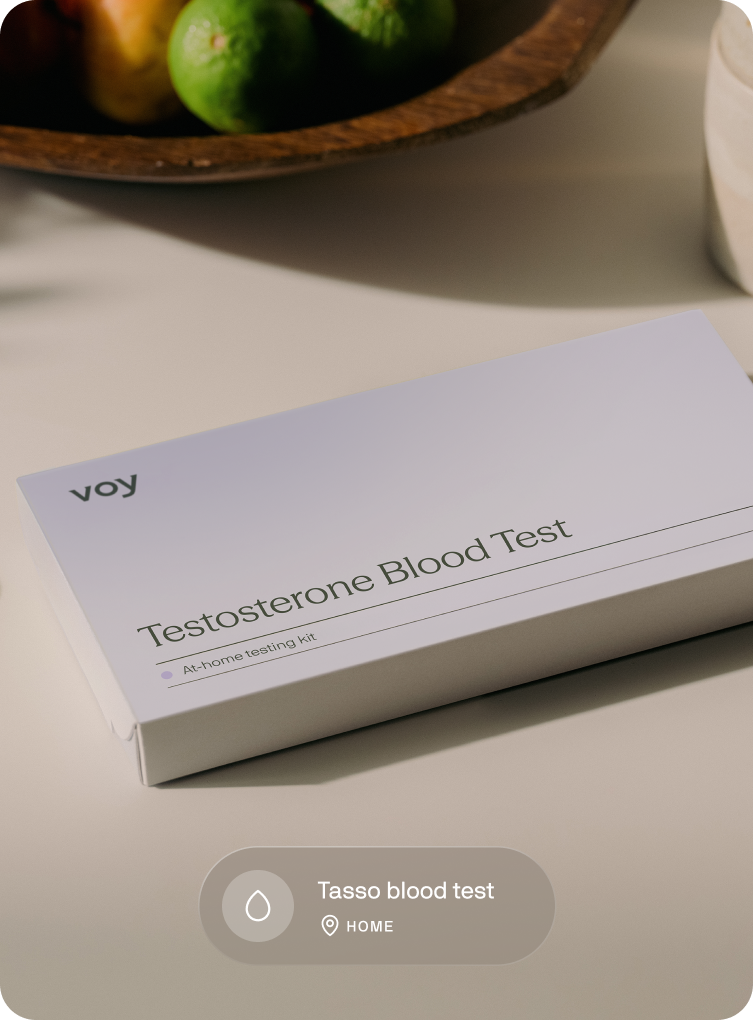
Regular blood tests are an important part of safe testosterone treatment.
You’ll usually have a check at 3 months after starting, and then annually if your levels are stable.
If your levels need adjusting, or if symptoms change, your clinician may recommend more frequent testing. You’ll always be guided clearly on what’s needed — both in your consultation and your clinic letter.
Testosterone prescribing isn’t based on blood levels alone. Symptoms matter, and some people can benefit from testosterone treatment even if their level falls within the reference range.In women, testosterone levels are often low-normal, and blood tests don’t always reflect how much testosterone is available to your tissues. This means symptoms such as low libido, fatigue, reduced motivation or brain fog can occur despite a “normal” blood result.
For this reason, testosterone may still be prescribed when symptoms are consistent and other causes have been considered. Treatment is always started and continued under clinical guidance.Blood tests are used alongside symptom review to make sure your testosterone level stays within a safe range and doesn’t become too high. This is an essential part of safe prescribing and helps your clinician adjust your dose if needed.
Everyone responds differently — but most women start to notice changes within 6 to 12 weeks.
Improvements in libido are often felt first. Other effects, like energy, mood, and cognitive clarity, may take a little longer and build gradually over time.
We’ll check in regularly to monitor your response, adjust your dose if needed, and make sure you’re getting the support you need along the way.
We don’t offer prescription-only plans because hormone treatments like testosterone need to be prescribed alongside ongoing clinical review.Even when things are going well, a clinician needs to review how you’re feeling and check your monitoring blood tests before continuing treatment. This is a required part of safe prescribing and helps ensure your dose stays right over time.Your plan includes the necessary blood tests and clinical reviews, so everything needed to continue your prescription is built into the plan.
Not when prescribed and monitored correctly. At the low doses used for women, testosterone is carefully balanced to support things like libido, energy, and mental clarity — without causing male physical traits.
Side effects like increased facial hair or acne are rare, and if they do happen, your dose can be adjusted. That’s why regular monitoring is key — and why our clinicians are here to guide you safely every step of the way.
Lifestyle changes can help support healthy testosterone levels in women.
Things like:
.png)
.png)
Treatment that works
Access to your expert team
Always connected
Stay on top of your progress with easy, regular check-ins.
Monitoring and Reviews
Hormone check blood test included
Optional whole-person support

You can now close this.